Every second, ~80+ million HTTP requests are sent over the internet on average. In that same second, Visa can handle no more than 65,000 payments, and Mastercard around 20,000.
Machines move data at the speed of the web. What happens when they start to move money the same way?
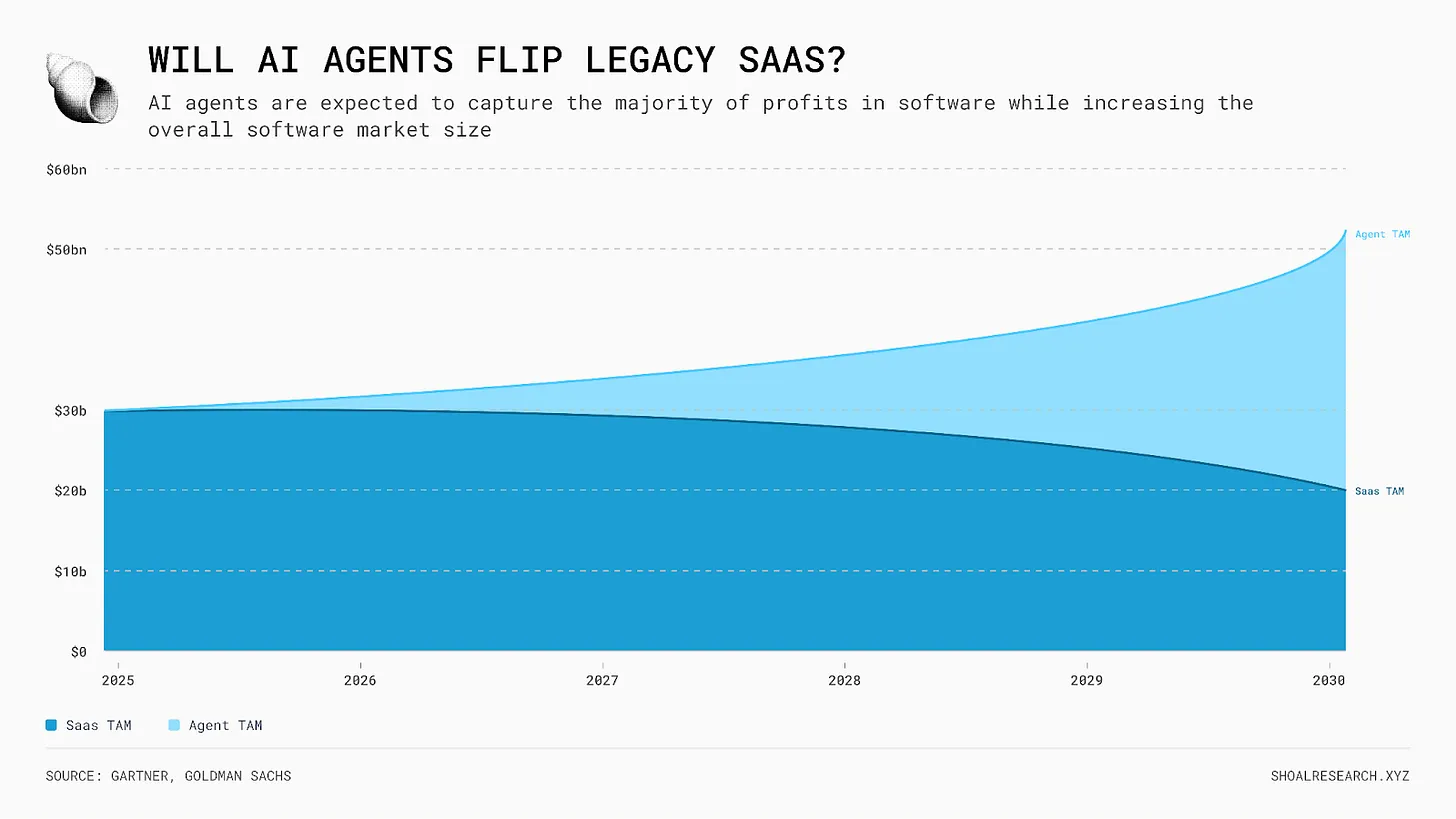
In the blink of an eye, LLMs have evolved beyond simple Q&A chatbots into context-aware, tool-equipped economic actors we now call agents.
No one quite knows how this development evolves from here, but payment incumbents wasted no time hedging their bets; Visa launched its Trusted Agent Protocol and a new CLI for agent payments; Mastercard released Agent Pay and Agent Suite, and in March executed Europe’s first live AI agent payment within a regulated banking framework alongside Banco Santander; American Express just recently announced the ACE developer toolkit, just to name a few names. Few compare to Stripe’s efforts, however, whose agentic stack now spans new agent payment primitives, business and developer tooling, and co-authoring an open-source payments protocol purpose-built for machine-to-machine payments.
Amid a great deal of warranted skepticism surrounding the impact of AI agents, trillion dollar market cap companies who certainly know a thing or two about payments are allocating significant resources to help software pay for software.
A payment is simply a way to settle an obligation: to exchange value for access to a specific good or service. For an agent, a payment may be the single blocker between a decision and a realized outcome by unlocking access to a necessary resource in a workflow the moment it’s needed. ‘Agentic payments’ and ‘agentic commerce’ have become the umbrella terms, and though the branding could use some work, the category has evidently materialized.
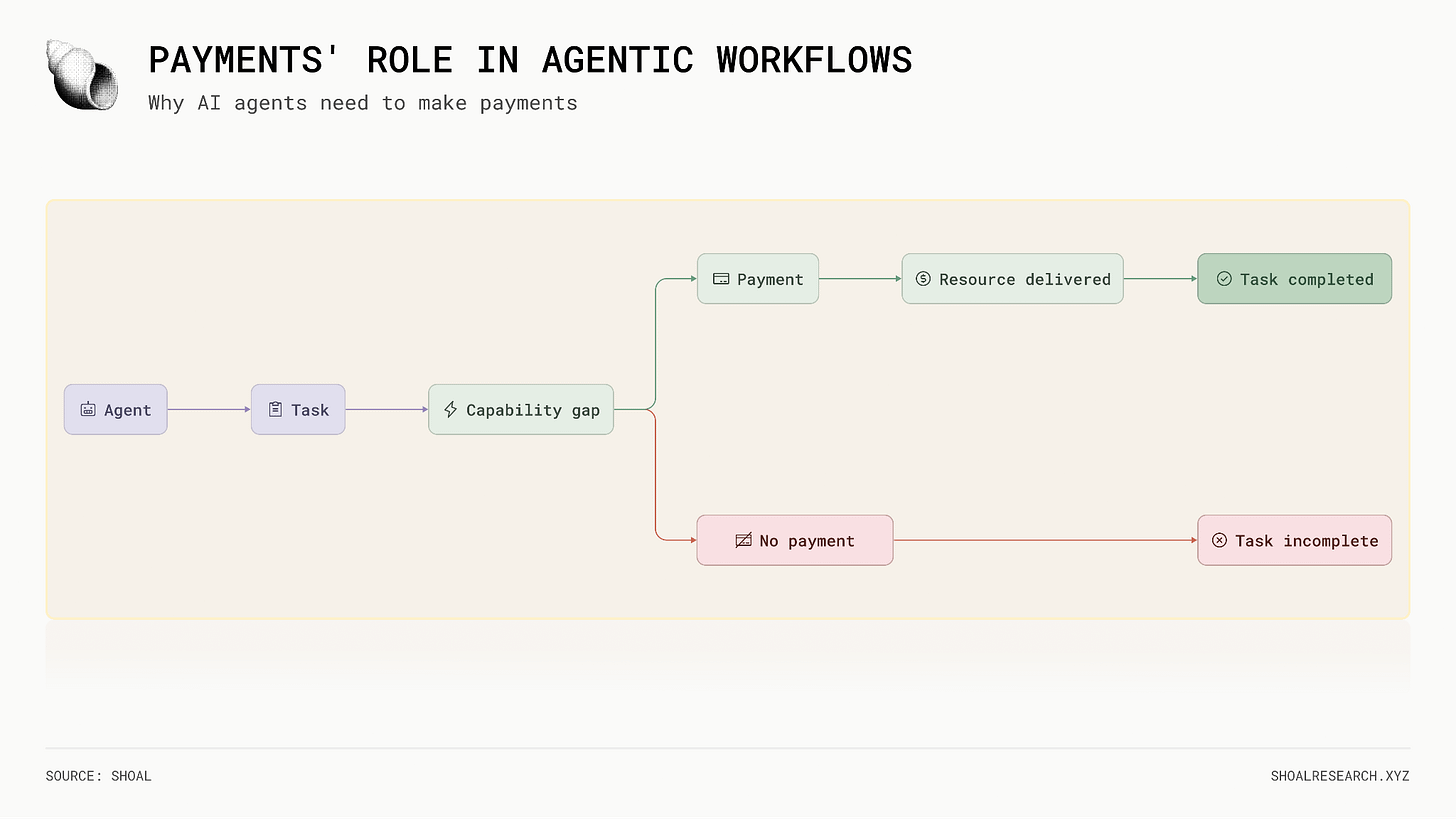
The interesting question remains what the supporting infrastructure will look like. Before we get there, it’s worth reviewing what it actually means when machines are moving money.
The free open public access to the internet we know and love is subsidized by advertisements. Bryan Kim puts this well:
“Internet advertising has created one of the greatest “public goods” in history, for the negligible price of occasionally having to look at ads for cat snuggies or hydroponic living room gardens.”
Google, Facebook, YouTube, and TikTok, have generated billions of dollars through ads, a simple act of monetizing basic human behavior: uncertainty. The gap between what someone intends to do and what they actually end up doing is the very premise of the attention economy. Every commercial webpage someone loads is an opportunity to present an ad to a persuadable consumer.
This model collapses when the primary consumer is an AI agent, who is a far more rational economic actor than a human by design.
An assigned task and a set of tools to complete that task (e.g. “Build me X using Y within budget Z”) leaves little room for ambiguity, while the lack of a limbic system means no susceptibility to the emotional pleas of advertisements.
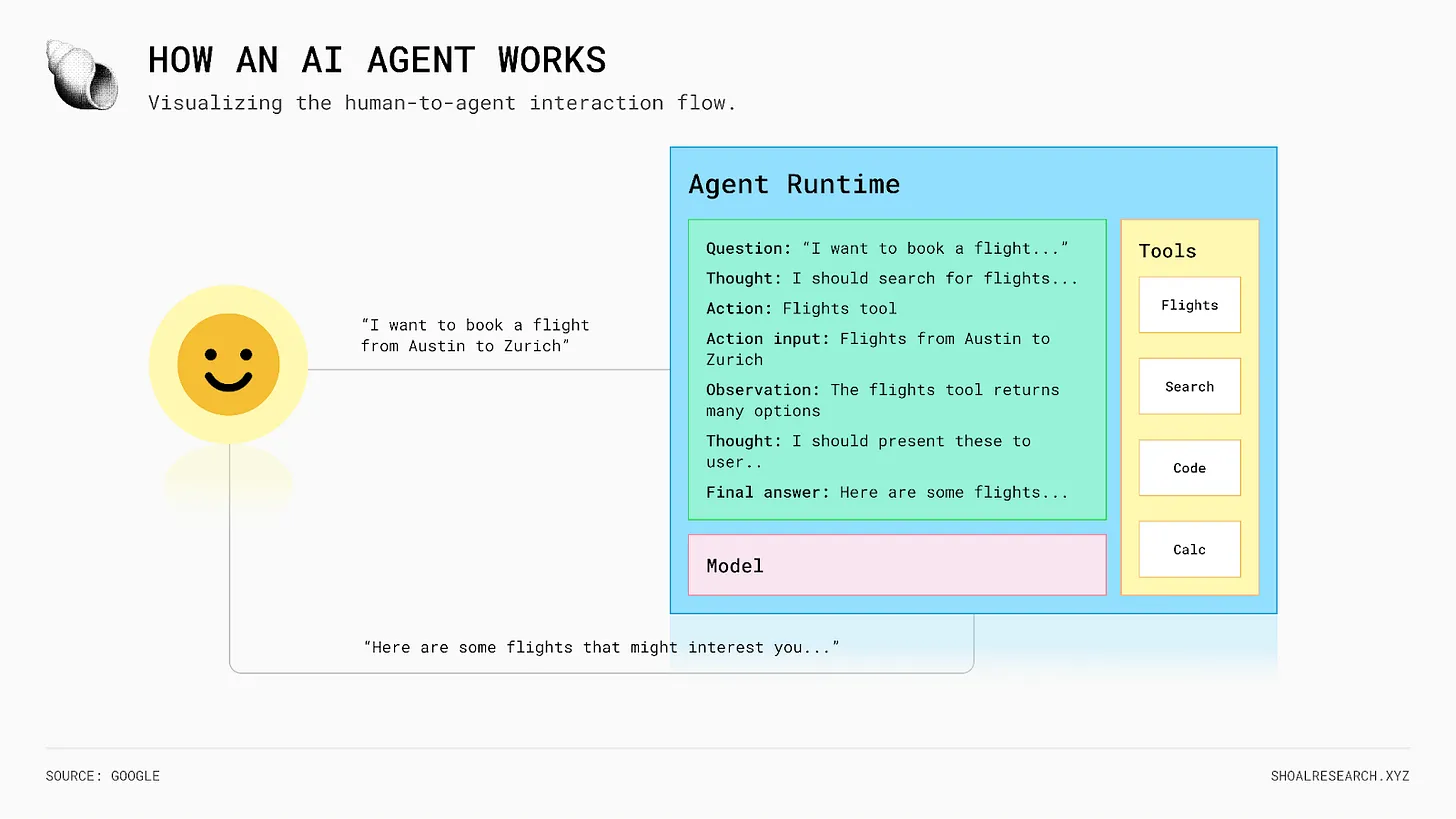
Agents as consumers exhibit behavior patterns quite distinct from humans. They don’t face the same cognitive constraints that humans do; their very purpose of these machines is to multiply our output by orders of magnitude. Importantly, this means their resource consumption is far more granular: they require more resources, more frequently, though often at much smaller quantities (per-call, per-request rather than per-seat or per-month).